









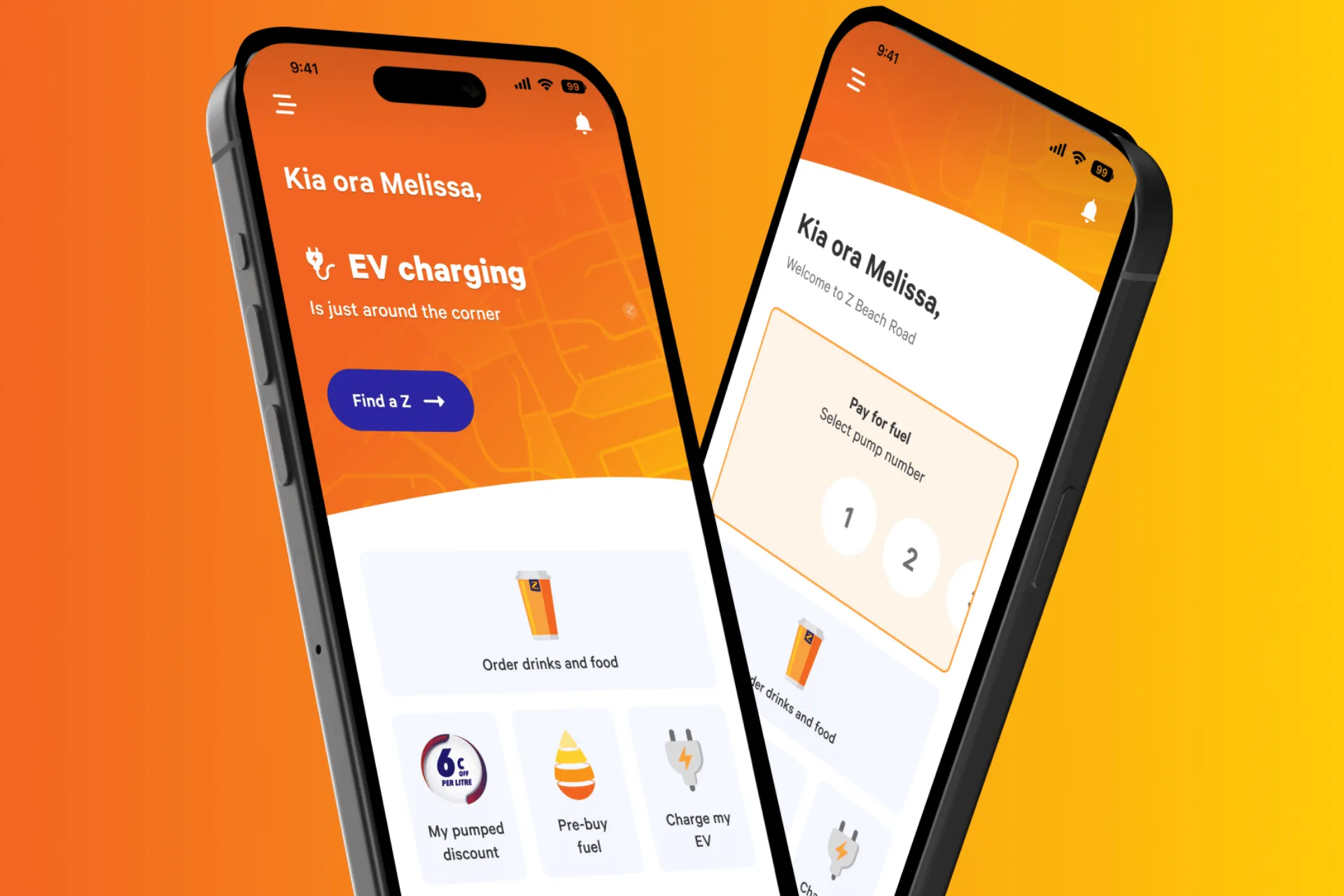


Since 2017, Z's partnership with RUSH has led to the development and release of improved loyalty and in-app experiences, and a roadmap for new products being developed and iterated on.
As the world keeps moving, Z wanted to ensure this app remains a pioneer of user experience excellence. Through extensive user research, usability testing and diary studies, we identified common themes that were limiting the customer experience as well as the ability for Z Energy to make progress against their goals. In order to scale, we realised that incremental changes would not be enough. A bigger reset was required, and this meant embarking on a journey to redesign the entire front end customer experience with the release of Z App 2.0.
Desired outcomes included easier onboarding for new customers, enhanced integration within the existing feature set, reduced friction across all features, and to set Z up for EV Charging integration and changes to the loyalty programme.
Rewriting an application is not a straightforward tech decision, but it comes with huge benefits. Years of constant development on the existing app meant a buildup of legacy code, old libraries, and every new feature adding weight to the system.
The project embraced a unique approach; we looked to optimise for predictability requiring more upfront investment in discovery and design with continuous agile refinements and research. With a clear roadmap established in advance, the team demonstrated flexibility and adaptability in response to the challenges posed by the old and new technologies.
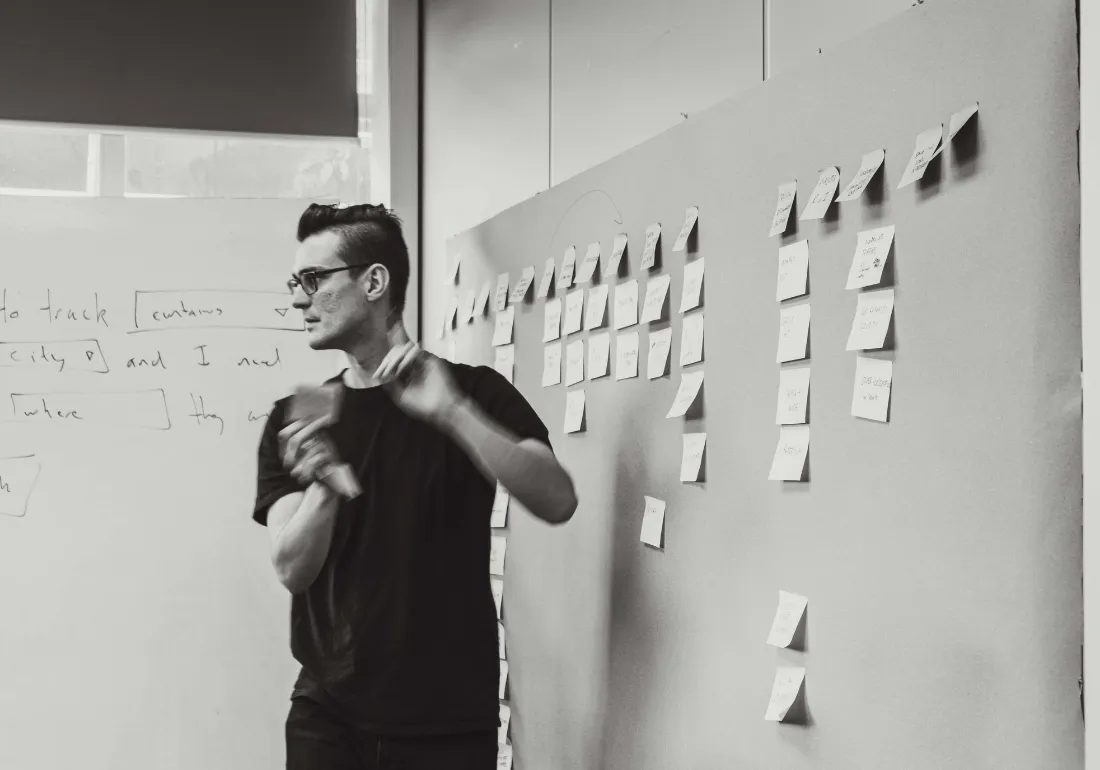
A collaborative design studio, led by designers, product managers, and capability experts, played a pivotal role in aligning stakeholders and defining the scope. The process prioritised constant adaptation, iterative development, and incremental design changes.
Through this process, the team successfully mitigated assumptions, achieved shared ownership, and streamlined development, ultimately enabling faster feature deployment. This ambitious undertaking involved rewriting both the front end and back end, eliminating legacy code, and adopting new technologies to enhance the overall user experience.
Build for scale, build to last
The engineering team at RUSH saw this project as a huge yet exciting challenge; managing the new FE build and BE upgrade/migration while at the same time managing the existing app through customer migration. Many of the developers have worked on the Z App since its inception, and considered this a “once-in-a-career” opportunity to rethink something they’d worked on for so long.
The team wanted to massively simplify backend complexity, while building for the existing and new events such as transactions and activations. The core of the project was migrating away from synchronous data flows where a server delay would cause performance issues to a fully asynchronous user data model.
An optimised way of working with QA automation and tight design-dev processes accelerated delivery in order to facilitate the newly designed CX.
Customer-centric migration
The migration strategy required enabling instant data transfer from the previous app to the new app, whilst also allowing for concurrent use of the original app as customers adjusted. The complexity of connecting a new frontend to the same backend was meticulously planned for complete compatibility and functionality.
The introduction of smart onboarding further streamlined the transition experience for users. Despite the inherent risks and resource challenges associated with redesign and migration projects, the team successfully justified the need for this strategic reset. The dual-app approach provides a temporary solution, allowing users to adapt before sunsetting the original app.