










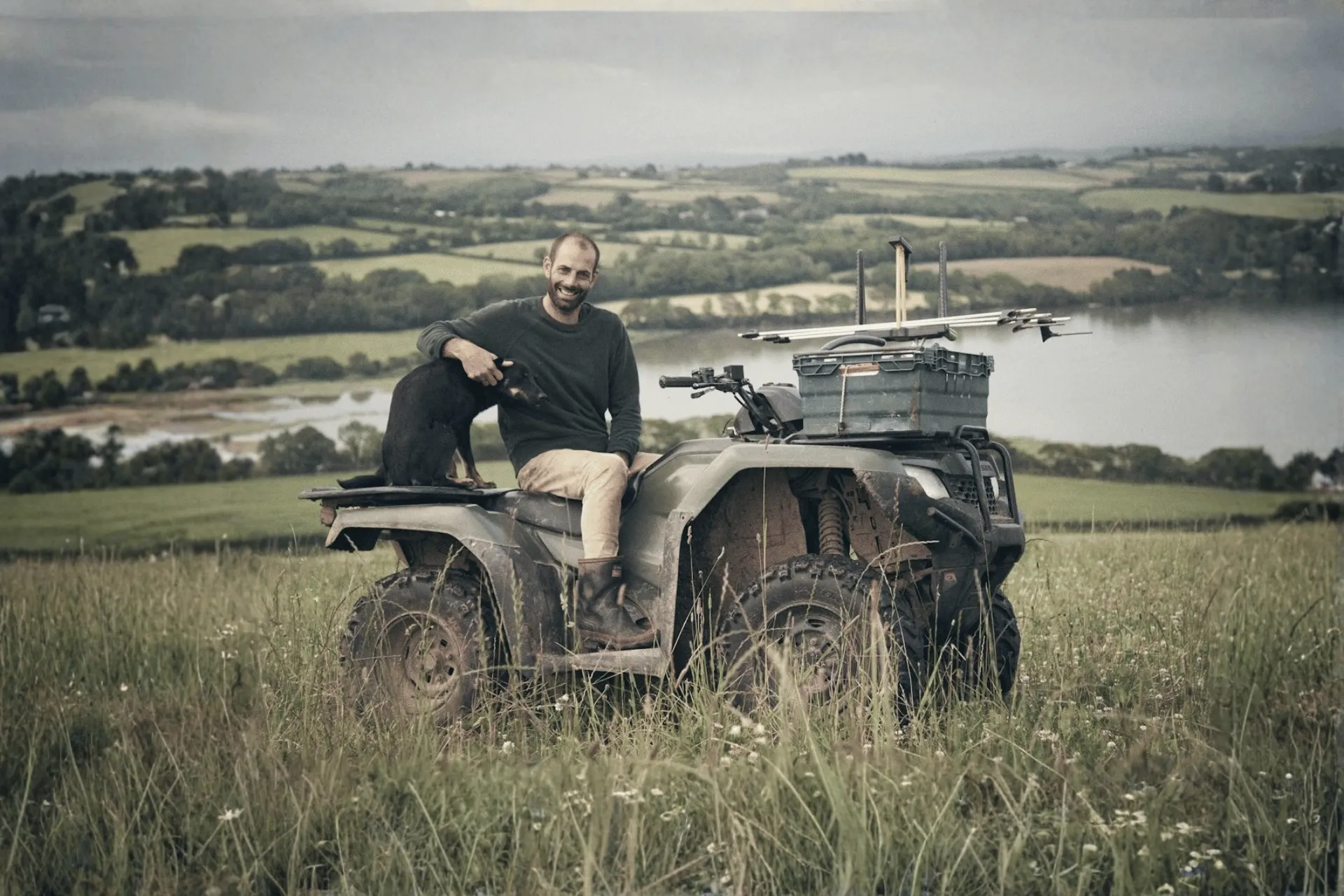
The best digital experience in agriculture is the one that doesn’t feel like one.
Farmers aren’t intimidated by technology. They’re busy, and they’ll always default to whatever takes the least effort. For a lot of rural New Zealand, that’s still a phone call to someone they know.
That’s how Tim Packer, RUSH’s Agri BDM, explains why so much agritech gets bought and never used. Any digital tool is up against that phone call, and it’s competing on friction rather than features. If it loses, it doesn’t matter how capable it is.
When I asked people across RUSH what good agritech looks like, two of them, working on different accounts, described the answer in almost the same way.
Agritechs low tolerance for friction
As Peter McHannigan, Strategy Principal at RUSH, puts it “the best interface is zero interface.” For spray compliance, that means the sprayer records what it applied and where, the data goes straight into the audit report, and the farmer only sees a summary to check and confirm.
That changes the relationship between the person and the record. Compliance stops being a task someone has to remember and complete at the end of a long day. It becomes a byproduct of work that was already happening.
Matt Varley, Programme Manager at Cucumber, RUSH’s Tauranga-based team, reached the same conclusion working on orchard management apps with T&G Global (formerly Turners & Growers). In his experience, the best digital tool in agriculture has so little friction it barely registers as digital. It’s built into the workflow, rather than something a person operates and then logs afterwards.
Most software is designed for someone sitting at a desk. Agritech has to work in an orchard block or a shed, for someone with both hands full, patchy signal, and somewhere else they need to be. Every extra tap costs them something real.
Sometimes the signal isn’t patchy, it’s gone. Matt pointed to orchard blocks with no cell coverage at all, where data has to be captured locally and synced once the person is back in range. The principle still holds. You just design for the gap.
When “zero interface” isn't possible
Some interactions can’t be automated, because they’re decisions rather than data. A farmer ordering supplies still has to choose what to buy. In that case the interface has to feel as easy as the phone call it’s competing with.
That was the brief when RUSH worked with Farmlands on FarmlandsPRO, the co-operative’s self-service ordering app. The research started with how shareholders actually run their businesses, and it was clear early on that the app needed to sit alongside farmers’ relationships with their Technical Field Sales reps, not replace them. Farmlands’ stated aim was to give those technical experts more time to help customers with on-farm and orchard challenges, and less time processing orders.
So the app works offline for farmers out of range, and ordering tasks that used to take two to four minutes now take around 40 seconds. In its 2025 half-year results, Farmlands reported that more than 7,000 shareholders had downloaded FarmlandsPRO and $70 million in sales had gone through it.
Where does the data go?
Invisible capture solves the friction problem. It doesn’t solve the insight problem. Data still needs to land in a system that can turn it into a yield forecast or a decision someone else in the business needs to make.
In our experience, that connection is usually the bigger piece of work, and the less visible one. Much of the effort on FarmlandsPRO went into working with Farmlands’ existing commerce and customer systems rather than building around them. An order placed on a phone in a paddock lands in the same place as one placed in store or through a rep.
What this means if you’re building agritech
The lesson isn’t “make the app simpler”. It’s to ask where data could be captured without anyone touching a screen, and where it needs to go once it is. That usually means less software for the farmer to operate and more infrastructure working quietly behind the scenes.
Tim expects the tolerance for friction to shift as farmers who grew up with a phone in hand take over. The principle that the best tool disappears into the work won’t.
Get the capture right but not the connection, and you’ve built a frictionless way to feed a system nobody can query. Getting both right decides whether a tool gets put to work season after season, or bought and left in the shed.